Tuesday, January 18, 2022

Daybreak

“Every day a million miracles begin at sunrise!” - Eric Jerome Dickey.

A tryst with  nature #Daybreak


Monday, January 17, 2022

Vibrant Colours of Nature

Colours are the smiles of nature” - Leigh Hunt

The riot of colours in nature never fails to lift your spirits. Mandarin ducks enhance the beauty of the pond with their stunning plumage. Sharing the beauty of these exotic water birds. Watching these gorgeous Mandarin ducks really made my day.

A tryst with nature #mandarinduck.


Thursday, January 13, 2022

A Breath of Fresh Air

"Every breath of air that we take, every mouthful of food that we take comes from that the natural world. If we damage the natural world, we damage ourselves." — Sir David Attenborough


Air pollution is the presence of pollutants in air which are detrimental to human health and other life systems around. It is the prime reason for climate change.

Carbon dioxide in air traps the sun’s heat in the earth’s atmosphere causing Green House Effect and makes the environment of earth hotter and hotter. Continous extraction and burning of fossil fuels like coal and oil release carbon dioxide which remains in the atmosphere for several years.

Short lived pollutants like black carbon, methane and ground-level ozone have a higher warming potential. Incomplete combustion of fuels produce these pollutants. Even though black carbon has a lifetime of 4-12 days, the warming impact due to it's presence remains 460-1,500 times higher than carbon dioxide on the climate. Methane gas has a lifetime of 12 years and a warming impact of 84 times higher than carbon dioxide.

Ground-level ozone is formed by the reaction of sunlight with other pollutants like carbon monoxide, methane and nitrogen oxides. It has a lifetime of a few hours to a few weeks and strongly impacts cloud formation, evaporation rates and precipitation levels.

Hence it is essential to reduce air pollution and few activities like 
promoting ultra low-carbon vehicles, renewable sources of electricity which do not involve combustion, energy efficiency measures and reducing agricultural demand for nitrogen contribute a lot in this context. 

Finally to say, the quality of the air we breathe depends mainly on the lifestyle choices we make and by altering our life style wisely reducing air pollution, we will preserve and protect our climate!

A tryst with nature #freshair


This post is part of Blogchatter's CauseAChatter

                                   https://www.theblogchatter.com/what-causeachatter-looks-like-in-2022


Wednesday, January 12, 2022

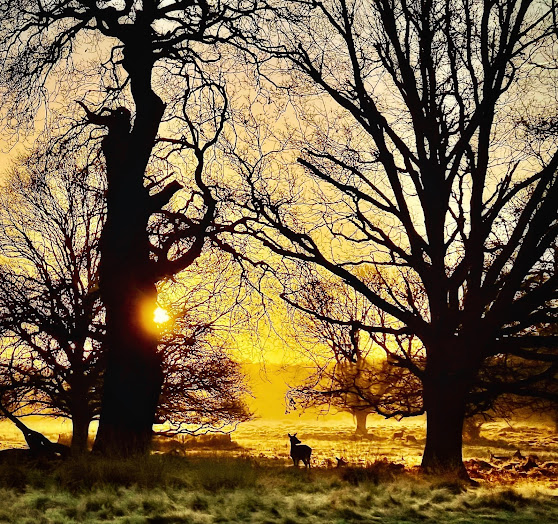
Misty Sunrise

 "The golden hue..the mist... all pervading silence... speak a language only a few can understand."

The best way to rejuvenate is to be in communication with nature. Presenting a few click of today's beautiful sunrise.

A tryst with nature #sunrise


Wednesday, November 10, 2021

Kingdom of Fungi

Nature alone is antique, and the oldest art a mushroom. - Thomas Carlyle


Fungi and mushrooms are beneficial to our ecosystem by processing dead material, healthy plant growth, nutrition, medicine and creating a healthier environment. Unlike plants, mushrooms cannot photosynthesize since they lack chlorophyll. Hence, they survive using special methods such as symbiosis, saprophstiym and parasitism.


Symbiosis: Many mushrooms are linked to trees by symbiosis. They help the tree extract minerals and water from the soil and in exchange, the tree supplies the mushroom with carbohydrates.

Saprophstiym: A few mushrooms feed themselves by digesting the organic matter and at the same time returns nutrients to the soil.

Parasitism: Some microscopic mushrooms are parasites. A few attack a healthy host (tree, plant or insect) and live on it without killing it while others attack unhealthy hosts, thereby hastening their death.


Some mushrooms remain poisonous in order to protect themselves from being eaten and that they can reproduce. A few non-poisonous ones use the opposite strategy. They need animals to eat them in order to spread spores through faeces. Presenting a few colourful poisonous mushrooms which I came across this autumn.


A tryst with nature #fungi


Flyagaric

Panther Cap


Magpie fungus (Coprinus picaceus)


This post is part of Blogchatter's CauseAChatter

Friday, November 5, 2021

Blue-Green Algae Alert


Blue green algae, also known as cyanobacteria is a type of bacteria which uses the sun’s energy to make food in the same way that plants do. They are commonly found in estuaries, inland waters and sea.

Blue-green algae grows in water which is enriched with nitrates and phosphates. Warm weather conditions along with nutrients result in algal blooms which produce a musty odour.

Though, they play an important role in shaping the biosphere, when the blooms die they break down, using up oxygen in the water and this causes problems for aquatic life such as fish.

Although many blue-green algae blooms are not toxic, some produce toxins which can irritate the skin and if swallowed, cause diarrhea and vomiting. High concentration level of toxins cause liver and nervous system damage. The following measures can help prevent a blue-green algae bloom from occurring:
  • Avoid overfeeding fish or birds; this reduces the cause for nutrient buildup.
  • Plant native flora around ponds which help in filtering water.
  • Avoid overuse of fertilizers, especially near bodies of water.
Although it is not advisable to stop blue green algae blooms, we need to follow proper guidelines to control their growth.

A tryst with nature #bluegreenalgae


This post is part of Blogchatter's CauseAChatter


Wednesday, October 20, 2021

Passion Flower

"If we could see the miracle of a single flower clearly our whole life would change." 


Passion flower is known for its 3-D design with striking and coloured filaments circling a central and exotic arena. These alluring flowers attract a number of butterflies and insects. Their glossy leaves offer a defence mechanism to protect from bugs. When an insect nibbles the leaves, they release chemicals that combine to produce dangerous cyanide which kills the pest. The fruits produced are edible though not very flavourful.

A tryst with nature #Passionflower